Wegovy Night Sweats: Why You're Sweating and What to Do About It
Key Takeaways
- Night sweats are not officially listed in Wegovy's FDA prescribing information, yet roughly 10-15% of semaglutide users report experiencing them.
- The sweating likely stems from how GLP-1 receptor activation affects the hypothalamus, metabolism, and hormonal balance.
- Most patients see symptoms resolve within 2-4 weeks as the body adjusts to the medication.
- Persistent or severe night sweats accompanied by fever or chills warrant a prompt conversation with your doctor.
Wegovy night sweats catch many patients completely off guard. You start semaglutide expecting nausea warnings, maybe some fatigue, but nobody prepared you for waking up drenched at 2 a.m. This article breaks down why it happens, how long it typically lasts, and what you can actually do to sleep comfortably while staying on track with your weight loss goals.
Wegovy Night Sweats: Why Patient Reports Don't Match Clinical Data
Here's the odd thing about Wegovy and sweating. Excessive perspiration, including night sweats, isn't documented as a primary side effect in FDA prescribing information or the clinical trial data for GLP-1 receptor agonists, according to research from TrimRx. Yet patients report it constantly. Forums fill up with descriptions of "drenching night sweats" that nobody warned them about.
Sweating occurs in approximately 10-15% of semaglutide users, according to PlexusDx. Compare that to nausea, which affects 15-44% of patients on GLP-1 medications according to Fella Health, and you can see why sweating gets less attention in clinical summaries. It's less common. But for the people experiencing it, that distinction offers zero comfort at 3 a.m.
How Wegovy Triggers Night Sweats: The Biological Mechanisms
Several distinct pathways connect semaglutide to increased sweating, and understanding them makes the experience feel less mysterious.
Thermoregulation and the hypothalamus: Wegovy influences brain regions responsible for controlling body temperature, according to PlexusDx. The hypothalamus acts as the body's internal thermostat, and GLP-1 receptor activation in those areas can disrupt how heat is managed. When the nervous system receives mixed signals about core temperature, sweating is a predictable response.
Metabolic heat production: Weight loss itself generates heat. As metabolism accelerates and the body burns through fat stores, it produces additional thermal energy. The body then uses sweating to shed that excess heat, particularly during sleep when you're lying still and can't dissipate warmth through movement.
Hormonal shifts: Rapid fat loss can alter the body's hormonal balance, since fat tissue plays a role in hormone metabolism. Separately, the medication mimics natural hormones, which can inadvertently affect how the endocrine system functions, according to TrimRx. Both pathways may contribute to changes in sweating patterns that resemble hot flashes in some patients.
Hypoglycemia as a secondary trigger: Low blood sugar is a well-known cause of night sweats, and it can occur with Wegovy, particularly when the medication is used alongside insulin or sulfonylureas. If your night sweats feel sudden and intense, tracking your blood sugar before bed is worth discussing with your provider.

Timeline: When Wegovy Night Sweats Start and Resolve
Onset is usually fast. Most patients begin noticing increased sweating within the first few days to one week of starting treatment, or shortly after a dose increase. The pattern tends to follow the dosing schedule closely, which is one of the clearest clues that the medication is the cause.
Peak intensity typically falls within the first 4-8 weeks. This is the adjustment phase, when the body is still calibrating to semaglutide's effects on metabolism and the nervous system. Insomnia and disrupted sleep are common companions during this window.
The good news: most patients find that excessive sweating decreases significantly within 2-4 weeks as the body adapts. Some people take longer. If night sweats persist beyond 8-12 weeks without meaningful improvement, that's the point where medical evaluation becomes genuinely necessary rather than optional.
Managing Night Sweats While Taking Wegovy
You don't have to just wait it out. Several practical adjustments can meaningfully reduce discomfort.
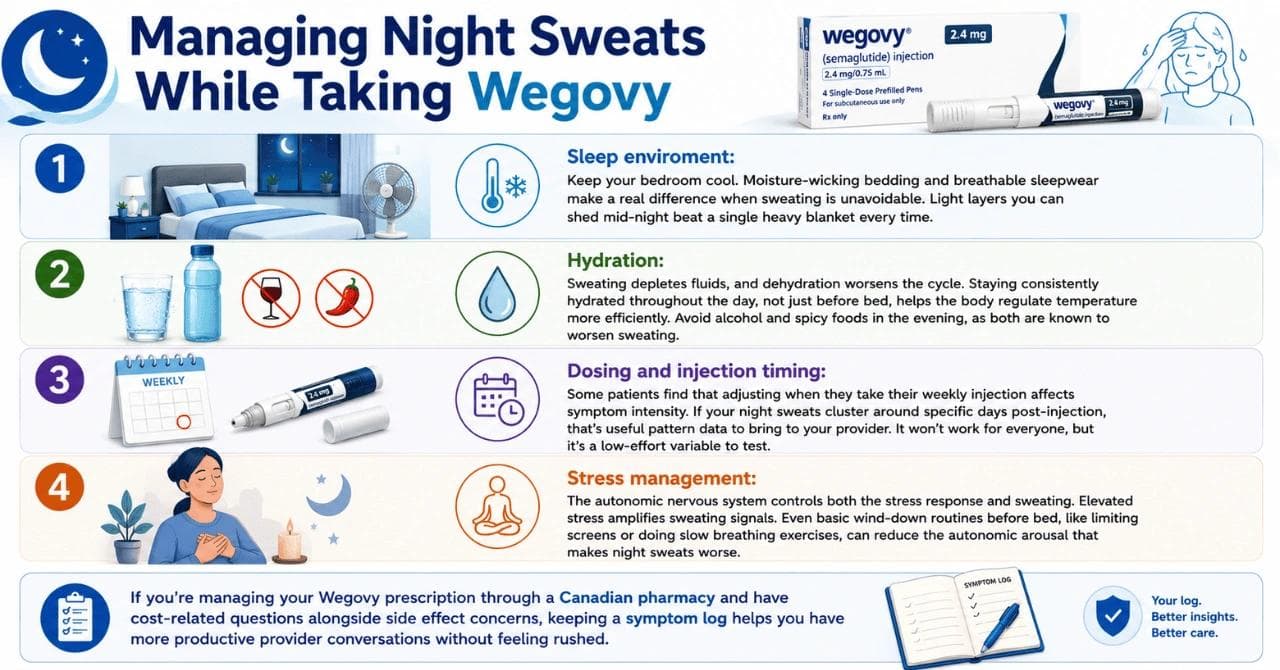
1. Sleep environment: Keep your bedroom cool. Moisture-wicking bedding and breathable sleepwear make a real difference when sweating is unavoidable. Light layers you can shed mid-night beat a single heavy blanket every time.
2. Hydration: Sweating depletes fluids, and dehydration worsens the cycle. Staying consistently hydrated throughout the day, not just before bed, helps the body regulate temperature more efficiently. Avoid alcohol and spicy foods in the evening, as both are known to worsen sweating.
3. Dosing and injection timing: Some patients find that adjusting when they take their weekly injection affects symptom intensity. If your night sweats cluster around specific days post-injection, that's useful pattern data to bring to your provider. It won't work for everyone, but it's a low-effort variable to test.
4. Stress management: The autonomic nervous system controls both the stress response and sweating. Elevated stress amplifies sweating signals. Even basic wind-down routines before bed, like limiting screens or doing slow breathing exercises, can reduce the autonomic arousal that makes night sweats worse.
If you're managing your Wegovy prescription through a Canadian pharmacy and have cost-related questions alongside side effect concerns, keeping a symptom log helps you have more productive provider conversations without feeling rushed.
Distinguishing Wegovy-Related Sweats From Other Medical Causes
Not every night sweat on Wegovy is caused by Wegovy. That distinction matters.
Red flags that warrant prompt medical attention include night sweats accompanied by fever, chills, or unexplained weight loss beyond what's expected from the medication, according to PlexusDx. Severe sleep disruption that's persisting beyond the initial adjustment window also deserves evaluation. These combinations can signal infections, thyroid dysfunction, or other hormonal imbalances that need their own workup.
Hypoglycemia deserves specific attention here. If you're also taking insulin or other diabetes medications alongside semaglutide, low blood sugar during sleep is a plausible and testable explanation. Tracking your blood sugar at bedtime and noting whether night sweats correlate with lower readings gives your doctor actionable information.
The key is pattern recognition. Wegovy-related sweating tends to cluster around dose increases and gradually improves over weeks. Sweating from another medical cause typically doesn't follow that pattern. Document timing, severity, and any accompanying symptoms before your next appointment. The Polar Bear Meds articles section has additional resources on managing GLP-1 side effects if you want a broader context.
Next Steps: Working With Your Healthcare Team
Start by tracking. Write down when night sweats occur, how severe they are, how long they last, and whether they correlate with your injection day. That pattern data is far more useful to a provider than a general complaint of "bad sweating.
Don't stop taking Wegovy because of night sweats without talking to your doctor first. The medication's benefits for weight loss and metabolic health are well-documented, and most sweating resolves on its own. Stopping abruptly removes those benefits without necessarily solving the underlying discomfort.
When you do speak with your provider, ask specifically about Wegovy night sweats management strategies. Cover whether injection timing adjustments make sense for your situation, whether your current dosing schedule is the likely trigger, and whether any concurrent medications could be contributing to hypoglycemia. An open, specific conversation gets better answers than a vague check-in. If you're sourcing your medication from Canada and want to explore your options, Polar Bear Meds offers licensed pharmacy access to GLP-1 medications with direct U.S. delivery.
Frequently Asked Questions
Night sweats aren't listed as a standard side effect in Wegovy's official FDA prescribing information or clinical trial summaries. Despite that, approximately 10-15% of semaglutide users report experiencing increased sweating, according to PlexusDx, and patient forums consistently describe "drenching night sweats" appearing in the first weeks of treatment. It's less prevalent than gastrointestinal side effects, but still a noticeable pattern across real-world users.
Yes, Wegovy can trigger night sweats in people who've never experienced them before. The mechanisms include GLP-1 receptor activation affecting the hypothalamus's temperature regulation, increased metabolic heat production from accelerated weight loss, and hormonal shifts caused by both rapid fat loss and the medication mimicking natural hormones, according to TrimRx and PlexusDx. These factors combine to disrupt the body's normal thermoregulation during sleep.
Sweating typically begins within the first few days to one week of starting treatment or after a dose increase. For most patients, symptoms peak during the first 4-8 weeks and then gradually improve as the body adjusts to semaglutide. Many people find resolution within 2-4 weeks, though some experience symptoms longer. If sweating hasn't improved meaningfully by 8-12 weeks, a conversation with your healthcare provider is the right next step.
Disclaimer
This article covers what current research and patient reports say about Wegovy and night sweats, but it's not medical advice. Side effects vary significantly between individuals, and only your doctor or pharmacist can evaluate your specific situation. If you're experiencing concerning symptoms, please consult a qualified healthcare provider before making any changes to your medication.