Can Zepbound Cause Redness, Hives, or Other Allergic Injection Site Reactions?
Key Takeaways
- Zepbound can trigger allergic reactions ranging from mild symptoms like rash and itching to severe reactions requiring emergency medical attention.
- Injection site reactions are common and include localized redness, swelling, bruising, and temporary rash around the needle entry point.
- Most allergic and injection site reactions occur within two weeks of starting treatment, with site reactions appearing immediately after administration.
- Mild reactions can be managed with antihistamines, steroid creams, and cold compresses, while severe reactions require immediate medical care.
- Emergency attention is necessary if experiencing severe swelling of face/throat, difficulty breathing, heart palpitations, or problems swallowing.
Zepbound can trigger both allergic reactions and injection site reactions. Common symptoms include rash, itching, swelling, and localized discomfort at the injection site. Most reactions occur within the initial two weeks of treatment, ranging from mild to severe.
While many reactions can be managed with antihistamines or topical treatments, severe symptoms such as difficulty breathing or facial swelling require immediate medical attention. Understanding the warning signs helps patients prepare for potential reactions.
Can Zepbound Trigger an Allergic Reaction Like Rash, Itching, or Facial Swelling? Symptoms, Onset, and When to Call Your Doctor
While Zepbound has proven to be an effective weight management medication for many patients, it carries a small but significant risk of allergic reactions that can range from mild skin irritation to potentially life-threatening responses. Symptoms may include rash, itching, flushing, or hives, with more severe cases potentially involving swelling of the face, tongue, or throat.
The onset of allergic reactions can occur rapidly after injection, making it vital for patients to monitor themselves closely after each dose. While mild reactions might only require antihistamines and medical consultation, severe symptoms demand immediate emergency attention. Anyone experiencing difficulty breathing, throat swelling, or significant facial edema should call 911 immediately.
Those with a history of drug allergies should discuss risk factors with their healthcare provider before starting Zepbound. Detailed documentation of any reactions helps guide future treatment decisions and guarantees an appropriate medical response.
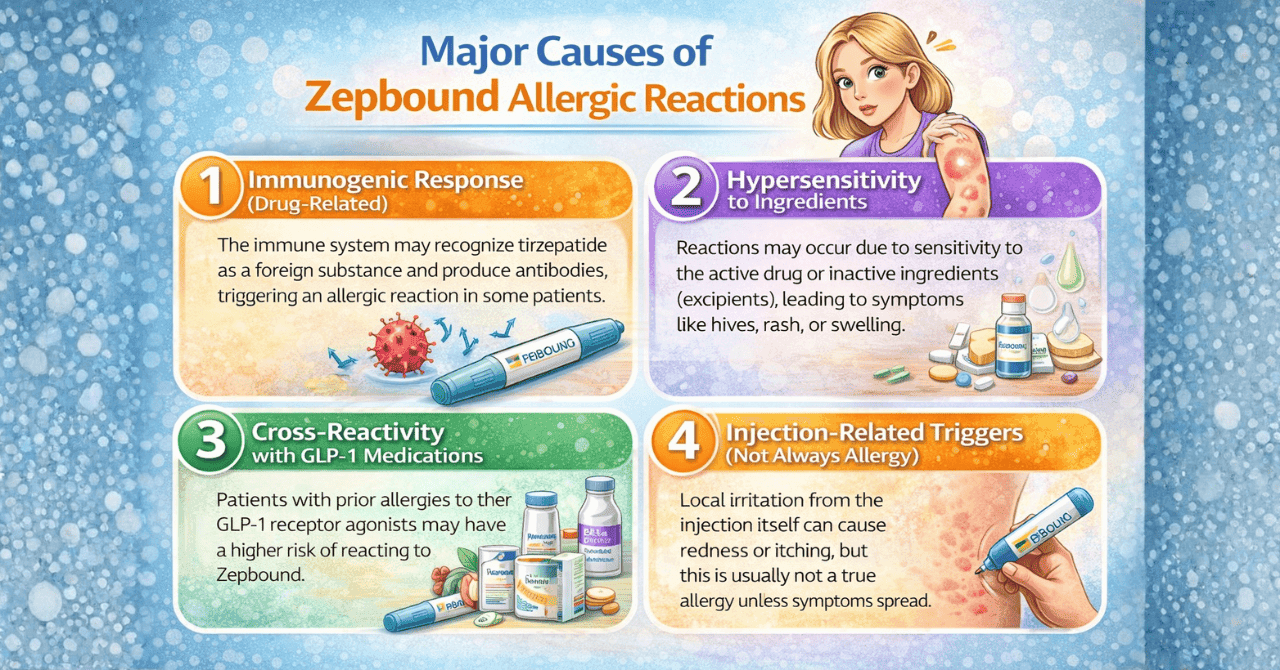
Major Causes of Zepbound Allergic Reactions
1. Immunogenic Response (Drug-Related)The immune system may recognize tirzepatide as a foreign substance and produce antibodies, triggering an allergic reaction in some patients.
2. Hypersensitivity to IngredientsReactions may occur due to sensitivity to the active drug or inactive ingredients (excipients), leading to symptoms like hives, rash, or swelling.
3. Cross-Reactivity with GLP-1 MedicationsPatients with prior allergies to other GLP-1 receptor agonists may have a higher risk of reacting to Zepbound.
4. Injection-Related Triggers (Not Always Allergy)Local irritation from the injection itself can cause redness or itching, but this is usually not a true allergy unless symptoms spread.
What Zepbound Injection Site Reactions, Like Redness, Swelling, or Hives, Should You Expect?
When patients commence their Zepbound treatment voyage, they should be prepared for common injection site reactions that can occur following administration. Understanding these typical responses helps individuals navigate their treatment path with confidence and awareness.
“Starting Zepbound treatment requires understanding potential injection reactions, empowering patients to move forward with knowledge and preparedness.”
Common injection site reactions with Zepbound include:
Redness, swelling, and localized discomfort at the injection site
Bruising or mild bleeding where the needle enters the skin
Itchiness or development of a temporary rash around the injection area
These reactions typically resolve within a few days and can be minimized through proper injection techniques and site rotation. Alternating between the abdomen, thigh, and upper arm helps reduce the likelihood of repeated irritation in one area. While most reactions are mild and self-limiting, patients should monitor their response and contact their healthcare provider if they experience severe or persistent symptoms that don’t improve over time.
How Soon Do Zepbound Side Effects Usually Start? Timing of Allergies and Injection Site Issues within 2 Weeks
Understanding how Zepbound side effects emerge helps patients prepare for and manage potential reactions effectively. Most side effects typically surface within the first two weeks of treatment, with injection site reactions occurring almost immediately after administration. These localized responses commonly include redness, swelling, and occasional bruising at the injection site.
Allergic reactions, while less common, require particular vigilance during the introductory weeks of treatment. These can range from mild skin reactions to severe symptoms requiring immediate medical attention. The most intense period for side effects, especially gastrointestinal issues such as nausea and abdominal pain, usually peaks within the initial fourteen days. Healthcare providers typically monitor patients closely during this critical window, adjusting treatment plans as needed. Regular communication about symptoms, particularly during dose changes, guarantees appropriate management and ideal treatment outcomes. Staying well-hydrated helps minimize the severity of initial side effects.
How to Manage Mild to Moderate Reactions Zepbound Reactions: Steroid Creams, Cold Packs, and Other At-Home Remedies?
Patients experiencing mild to moderate reactions to Zepbound can effectively manage their symptoms through several at-home remedies and over-the-counter treatments. At the time of dealing with injection site reactions or allergic responses, individuals have multiple options to alleviate discomfort and promote healing.
Topical treatments such as steroid creams and hydrocortisone can reduce inflammation and itching, while calamine lotion provides additional relief for skin irritation
Cold therapy methods, including cool compresses and ice packs, help minimize swelling and soothe the affected area, particularly at injection sites
Oral medications such as antihistamines can address systemic allergic symptoms, while over-the-counter pain relievers help manage localized discomfort
For ideal recovery, patients should maintain proper hydration and avoid potential irritants. While these remedies often prove effective, monitoring symptoms and communicating any concerns with healthcare providers is essential, especially if reactions persist or worsen.
When to Seek Immediate Emergency Help: Heart Palpitations, Severe Swelling, and Serious Zepbound Allergic Events?
While at-home remedies effectively manage mild allergic reactions to Zepbound, recognizing the signs that warrant immediate medical attention can be lifesaving. If patients experience severe swelling of the face, throat, tongue, or lips, they should call emergency services immediately. Heart palpitations also require urgent medical evaluation.
Other serious symptoms demanding immediate medical intervention include difficulty breathing or swallowing, severe rashes, and fainting episodes. These reactions could indicate a potentially life-threatening allergic response. Patients should maintain detailed records of their symptoms and any medications they’re taking to share with healthcare providers.
Those with pre-existing conditions must be particularly vigilant about monitoring their reactions to Zepbound. Even if symptoms seem moderate, persistent or worsening side effects should prompt medical consultation. Healthcare providers may need to adjust treatment plans or switch to alternative medications to guarantee patient safety and ideal treatment outcomes.
How to Reduce Zepbound Injection Site Pain, Redness, or Irritation with Proper Technique?
Successful management of Zepbound injection site discomfort relies heavily on proper technique and consistent site rotation practices. Patients can minimize local reactions and optimize their treatment experience by implementing evidence-based strategies.
Key practices for reducing injection site reactions include:
Rotate injection sites weekly between the abdomen, thigh, and upper arm, maintaining at least 1 inch between previous injection points.
Allow alcohol-cleansed skin to dry completely, then inject at a 90-degree angle using gentle, steady pressure.
Apply cold compresses post-injection to minimize discomfort, and avoid rubbing the area.
Most injection site reactions, such as redness, bruising, or mild swelling, typically resolve within days without intervention. Over-the-counter pain relievers and topical treatments can provide relief as needed. However, tracking injection sites using a body map helps maintain proper rotation and prevents complications such as lipohypertrophy, ensuring consistent medication absorption.
Considering Zepbound
See current Zepbound pricing and ordering details through Polar Bear Meds, a licensed Canadian pharmacy. Prescription required.
Frequently Asked Questions
No latex is listed in Zepbound’s components. Consult your healthcare provider before starting treatment if you have a latex allergy.
No direct link exists between alcohol and increased allergic reactions with tirzepatide. Alcohol may worsen general side effects.
Allergy testing is available before Zepbound treatment. Stop antihistamines 7 days prior to testing. Follow your provider’s pre-test preparation instructions.
Antihistamines do not reduce Zepbound’s effectiveness as they operate through separate biological pathways.
No specific food interactions exist with Zepbound, but avoid:
- High-fat foods
- Processed foods
- Refined carbohydrates
- Alcohol
- Carbonated drinks
These recommendations help optimize treatment effectiveness and reduce digestive discomfort.
Yes, Zepbound can cause a mild rash, redness, itching, or swelling at the injection site. These are usually harmless and go away in a few days. Use a cool compress or follow your healthcare provider's recommendations for symptom relief. Seek immediate medical attention if the rash spreads rapidly or occurs with facial swelling, difficulty breathing, or trouble swallowing.
It may cause rash, hives, itching, swelling (face, lips, or throat), dizziness, or trouble breathing. Mild symptoms can be managed at home, but severe reactions need immediate medical help.
Always monitor your body after an injection and contact your doctor if anything feels unusual.
Injection site reactions from Zepbound typically last a few hours to 2–3 days. If the reaction worsens, lasts longer, or shows signs of infection, follow up with your doctor or pharmacist.
If you get a rash after a Zepbound injection, monitor it closely. For a mild rash, call your doctor right away. They may suggest treatment to manage the symptoms and advise whether it's safe to continue the medication.
If you do not have insurance coverage for Zepbound or your plan does not cover the medication, your out-of-pocket cost can vary depending on the pharmacy and dosage. Some patients compare prices through licensed Canadian pharmacies.
As of 2026, Polar Bear Meds offers brand-name Zepbound KwikPens starting at $499.99 for one 2.5 mg/0.6 mL pen (4 doses), compared with an average U.S. retail price of approximately $1,580. Prices and product availability may change over time, so always check the latest pricing before placing an order and ensure you have a valid prescription.