Zepbound and Insomnia: Does Zepbound Really Disrupt Your Sleep?
Key Takeaways
- Insomnia is not listed as a direct side effect in Zepbound's clinical trials or prescribing information.
- Sleep disturbances, when they occur, are typically indirect and linked to GI side effects or metabolic adjustment.
- Sleep issues usually resolve within 6 to 8 weeks at a stable dose.
- Tirzepatide can actually improve sleep quality long-term, especially for people with obstructive sleep apnea.
Zepbound (tirzepatide) is one of the most talked-about weight loss medications right now, and questions about Zepbound side effects on sleep are coming up constantly. The short answer: insomnia isn't a direct side effect of this medication. But that doesn't mean your sleep is guaranteed to stay perfect, either. Here's what the evidence actually shows and what you can do about it.
Does Zepbound Actually Cause Insomnia? What the Data Shows
Here's something that surprises a lot of people. Insomnia isn't listed as a common or direct side effect in Zepbound's prescribing information or in its major clinical trials. What is listed: fatigue. According to clinical trial data, tiredness and low energy affected roughly 5 to 7% of patients, depending on dose, making it one of the more consistently reported complaints.
That distinction matters. Fatigue and insomnia feel connected, but they're not the same thing. Feeling wiped out during the day is very different from lying awake at 2 a.m. staring at the ceiling. Some patients conflate the two, which leads to confusion about what Zepbound is actually doing to their sleep. Tirzepatide's insomnia, as a direct pharmacological effect, doesn't have strong clinical backing.
Why Sleep Disturbances Happen: The Indirect Pathway
So if Zepbound side effects sleep problems aren't direct, what's causing them? The answer usually traces back to the GI system. Nausea, vomiting, diarrhea, constipation, indigestion, and abdominal pain are all well-documented side effects of tirzepatide, and any of these can shatter sleep onset or maintenance when they hit at night.
Slowed gastric emptying is another piece of the puzzle. When food sits in your stomach longer than usual, eating a normal-sized dinner at 8 p.m. can mean significant digestive discomfort by midnight. Your body simply isn't processing the meal the way it used to.
Beyond GI issues, blood sugar fluctuations during early treatment weeks can also play a role. The metabolic adjustment period is real. Your body is recalibrating its energy signals, and that process isn't always smooth. On top of the physical side, some people experience anxiety or psychological adjustment tied to rapid weight loss, a body that's changing faster than expected. That mental load can absolutely affect sleep quality, even when nothing is physically wrong.
Timeline: When Zepbound Onset Insomnia Starts and How Long It Lasts
Sleep disturbances with Zepbound tend to show up in the first two weeks after a dose increase, not usually on the starter dose. That timing is worth tracking. If your sleep suddenly worsens, think back to whether you recently escalated your dose.
The good news is that the Zepbound onset of insomnia is temporary for most users. According to available sources, sleep issues typically last 2 to 4 weeks per dose escalation and usually normalize within 6 to 8 weeks once a stable maintenance dose is reached. Your body does adjust.
If sleep problems are still disruptive after 4 to 6 weeks at a stable dose, that's the signal to call your provider. Persistent issues at that point likely need a closer look, whether that's the titration pace, timing of the injection, or something else entirely going on.
The Sleep Apnea Advantage: How Zepbound Improves Sleep Quality
Here's the part of the story that often gets buried. For people with moderate to severe obstructive sleep apnea (OSA), Zepbound may actually be one of the best things that's ever happened to their sleep.
The SURMOUNT-OSA trial produced striking results. Patients taking tirzepatide experienced 27 to 30 fewer sleep apnea events per hour, compared to just 5 to 6 fewer events in the placebo group. Those patients also lost an average of 18.1% of their body weight. That weight loss directly reduces airway obstruction, which is the root cause of OSA in most cases.
So while some users deal with short-term sleep disturbances during dose escalation, the long-term trajectory for sleep quality on this GLP-1 medication is often positive, particularly for anyone whose sleep apnea has been quietly wrecking their rest for years. If you're considering this treatment, you can explore Zepbound tirzepatide options through Polar Bear Meds, a licensed Canadian pharmacy serving U.S. patients.
Practical Solutions: Manage Zepbound Insomnia With These Strategies
Managing sleep issues while on Zepbound doesn't require anything drastic. A few targeted adjustments make a real difference.
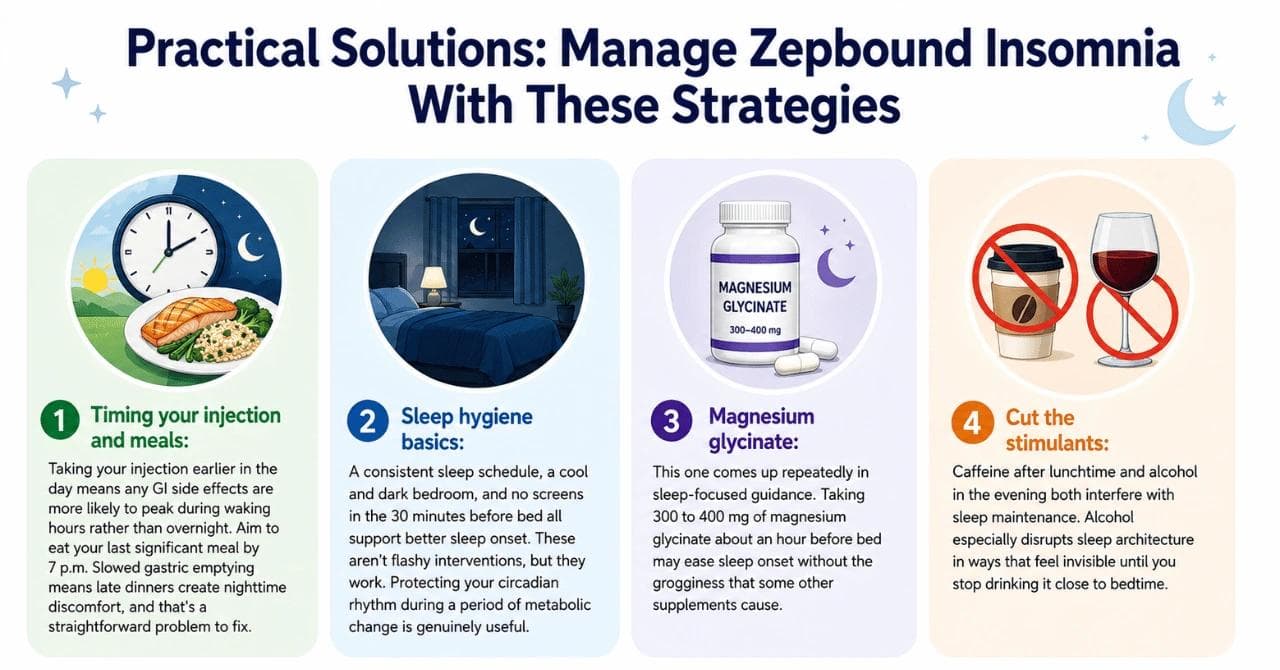
- Timing your injection and meals: Taking your injection earlier in the day means any GI side effects are more likely to peak during waking hours rather than overnight. Aim to eat your last significant meal by 7 p.m. Slowed gastric emptying means late dinners create nighttime discomfort, and that's a straightforward problem to fix.
- Sleep hygiene basics: A consistent sleep schedule, a cool and dark bedroom, and no screens in the 30 minutes before bed all support better sleep onset. These aren't flashy interventions, but they work. Protecting your circadian rhythm during a period of metabolic change is genuinely useful.
- Magnesium glycinate: This one comes up repeatedly in sleep-focused guidance. Taking 300 to 400 mg of magnesium glycinate about an hour before bed may ease sleep onset without the grogginess that some other supplements cause.
- Cut the stimulants: Caffeine after lunchtime and alcohol in the evening both interfere with sleep maintenance. Alcohol especially disrupts sleep architecture in ways that feel invisible until you stop drinking it close to bedtime.
These strategies, combined with staying well-hydrated and keeping exercise to earlier in the day, cover most of what you can control. If you want to read more about managing your medications effectively, Polar Bear Meds' articles section has additional resources worth browsing.
When to Contact Your Doctor About Sleep Problems
Most Zepbound-related sleep issues resolve on their own. But some situations call for a real conversation with your provider.
Reach out if sleep disturbances are still worsening after 4 to 6 weeks at a stable dose. That timeline matters. Also, contact your provider if you're experiencing severe GI symptoms at night, signs of low blood sugar, or anything that feels like more than routine adjustment discomfort. These may point to dose timing issues or a titration pace that needs adjusting.
And if you've never been evaluated for a sleep disorder, this is a reasonable time to ask. Ruling out an underlying condition like OSA before attributing everything to the medication is just good medicine.
Managing Sleep While Maximizing Your Zepbound Treatment
Sleep disruption with Zepbound is typically temporary, indirect, and manageable with practical adjustments. The Zepbound medication's impact on sleep is rarely a direct pharmacological effect. It's almost always a downstream result of GI side effects or the body's metabolic recalibration during early treatment.
Long-term, the picture often improves significantly, especially for patients with obstructive sleep apnea who see real, measurable reductions in apnea events. The strategies above give you real tools to protect your sleep while the treatment does its work. And if something feels off beyond the normal adjustment window, your provider is the right person to loop in. You can also upload your prescription directly to Polar Bear Meds to get started on your treatment at a lower cost.
Frequently Asked Questions
Insomnia isn't listed as a direct side effect in Zepbound's clinical trials or prescribing information. Fatigue is actually the more commonly reported issue, affecting about 5 to 7% of patients. Sleep disturbances, when they do occur, are typically indirect and linked to GI side effects like nausea or abdominal discomfort, or to the body's metabolic adjustment during early treatment weeks.
For most users, Zepbound-related sleep issues are temporary. They typically last 2 to 4 weeks per dose escalation and usually resolve within 6 to 8 weeks once a stable maintenance dose is reached. If sleep problems persist beyond 4 to 6 weeks at a stable dose, that's a good reason to consult your healthcare provider.
Eating your last meal by 7 p.m. reduces nighttime GI discomfort from slowed gastric emptying. Taking 300 to 400 mg of magnesium glycinate about an hour before bed can support sleep onset, and consistent sleep hygiene practices, like a regular schedule and a dark bedroom, help stabilize your circadian rhythm. Avoiding caffeine after lunch and limiting alcohol in the evening also makes a meaningful difference.
Disclaimer
This article covers what the research says about Zepbound and sleep, but it's not medical advice. Everyone responds differently to medication, and your specific health history matters. Before starting tirzepatide or making changes to your treatment, talk to your doctor or a licensed pharmacist who knows your full picture.