Camping on GLP-1 Medication in 2026: The Backcountry Guide for US Hikers
Key Takeaways
- As of mid-2026, healthcare providers and patient education resources are placing greater emphasis on heat-related dehydration risks for people taking GLP-1 medications during summer.
- Unrefrigerated shelf lives vary by medication: Ozempic lasts up to 56 days, Wegovy up to 28 days, and Zepbound up to 21 days, all at a ceiling of 86°F.
- As of mid-2026, evaporative cooling wallets can hold safe medication temperatures within a range of 64.4°F to 78.8°F for a minimum of 45 hours per water activation.
- Intentional eating and hydration schedules matter more on the trail than they do at home, because GLP-1 agonists suppress both hunger and thirst.
Camping on GLP-1 medication is genuinely doable, but it requires more planning than many hikers expect. Whether you're hiking with semaglutide or tirzepatide, summer 2026 brings two added challenges for US campers: protecting your medication from heat and preventing dehydration before symptoms appear.
Hiking on GLP-1s in 2026: What's Actually Different This Summer
As of mid-2026, medical professionals are issuing heightened warnings for GLP-1 users who hike or camp in summer heat. The concern goes beyond comfort. Medications like semaglutide and tirzepatide suppress natural thirst cues, which turns a sweaty afternoon on the trail into a genuine dehydration hazard.
The second risk is quieter: medication storage failure. A pen that's been exposed to excessive heat may lose potency even if it still looks normal. For US campers and backpackers managing Ozempic, Wegovy, or Zepbound on multi-day trips, knowing both risks before you leave the trailhead matters.
How Long Does Your GLP-1 Pen Survive Without a Fridge
This is the question that shapes your entire trip plan. Each GLP-1 medication has a different unrefrigerated shelf life, and all of them share the same temperature ceiling.
| Medication | Max Temp (°F) | Unrefrigerated Shelf Life |
|---|---|---|
| Ozempic (semaglutide) | 86°F | Up to 56 days |
| Wegovy (semaglutide) | 86°F | Up to 28 days |
| Zepbound / Mounjaro (tirzepatide) | 86°F | Up to 21 days |
← Swipe to see more →
These basic Ozempic and camping tips also apply to most semaglutide pens used during multi-day outdoor trips. As of early 2026, these are the manufacturer and pharmacy guidelines for room-temperature storage. The 86°F ceiling is where the real backcountry problem begins. A tent in direct sun, a dark stuff sack on a desert trail, or a car parked at a trailhead can all push well past that limit. The number on the label assumes ambient air temperature, not radiant heat.
For Wegovy and backpacking, careful storage planning matters because the medication remains usable for up to 28 days at recommended room temperatures. If you're on Ozempic, a two-week backpacking trip is well within the storage window.
Checked baggage may expose medications to temperatures outside the recommended storage range, including freezing conditions. For that reason, manufacturers recommend carrying GLP-1 pens in your carry-on luggage.
Backcountry Cooler Tech: Keeping Pens Safe Without Electricity
Managing GLP-1 outdoors without electricity comes down to two realistic storage options, and the right one depends on your setup.
Evaporative cooling wallets are the go-to for solo backpackers and multi-day hikers. As of mid-2026, these use water-activated crystals to maintain a safe ambient temperature range of 64.4°F to 78.8°F for a minimum of 45 hours per water activation. No ice, no power, no bulk. You re-wet them at any water source. For a three-day desert hike where weight and pack space are tight, this is the practical choice.
Vacuum-insulated cases with phase-change ice packs or an insulin cooler work better for car camping or base-camp setups where you're not carrying everything on your back. They hold cold longer under extreme heat, but they're heavier, and you'll eventually run out of cooling capacity without resupply.
Real-world scenarios for US campers:
- 3-day desert hike: An evaporative wallet re-wetted at each water source handles this cleanly. Keep the wallet out of direct sun during rest breaks.
- Week-long canoe trip: An evaporative wallet works if you're on water daily. A small insulated case gives extra buffer on hot portage days.
- Drive-in campsite: A quality insulated cooler with ice packs is the simplest solution. Keep the pen away from ice contact to avoid freezing.
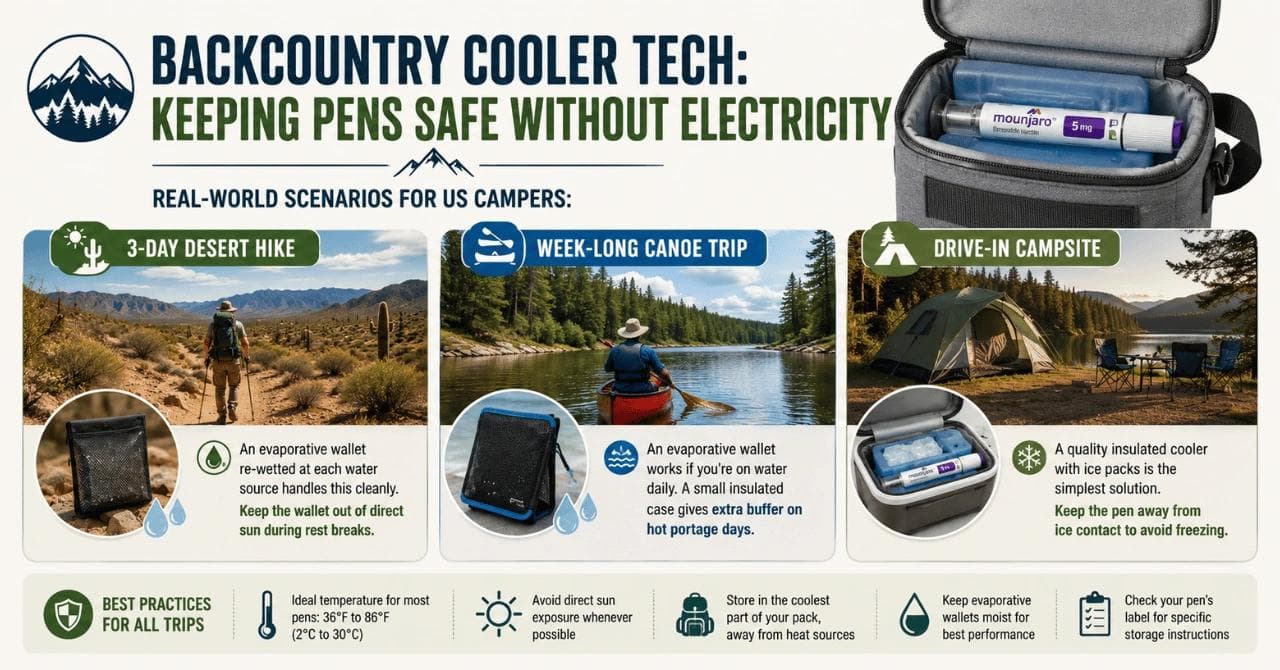
Whatever you use, keep the pen in the shade during rest stops. Don't leave it in a vehicle or a tent in direct sun, even briefly.
Dehydration on GLP-1s: The Silent Trail Hazard
Here's what makes hiking with semaglutide or tirzepatide genuinely different from hiking without these GLP-1 agonists. Both medications suppress your natural thirst cues. On a flat day in mild weather, that's manageable. On a strenuous climb in summer heat, it can quietly become dangerous.
Delayed gastric emptying may make drinking feel less comfortable, especially if nausea is present. The result is that your body signals less thirst, drinking feels harder, and you're losing more fluid through sweat than usual.
The fix isn't complicated, but it has to be intentional. Don't wait to feel thirsty. Drink on a schedule during active hiking rather than relying on thirst to prompt you. Electrolytes help, especially on hot days or at elevation where losses are higher. Watch for early heat exhaustion signs: headache, muscle cramps, and dizziness. Those are the signals to stop, get into shade, and drink before the situation escalates. Wilderness first aid basics apply here: rest, fluids, and shade are your first tools.
Trail Nutrition and Side Effect Management in the Backcountry
Appetite suppression is one of the therapeutic goals of GLP-1 agonists, but it works against you on a high-calorie-burn day in the mountains. Your body needs fuel, your medication is telling you it doesn't. Regular meals also help support more stable blood sugar and energy during long hiking days. That disconnect can drain energy levels fast and, over days, contribute to muscle loss.
The solution is scheduled eating. Treat meals like a medication dose: they happen at set times, regardless of hunger. Focus on protein-dense, easy-to-digest trail foods to maintain muscle mass and energy levels on the trail. Nutrition planning before the trip matters just as much as choosing the right outdoor gear.
For managing side effects in the backcountry, the key is honest self-assessment. GI distress, nausea, constipation, diarrhea, and vomiting are real concerns, especially in the first weeks on a new dose. Miles from a trailhead is not the place to discover a dose increase doesn't suit you. Stay close to known water sources on difficult days, and have a clear turnaround plan if symptoms become severe.
Injection timing is worth discussing with your prescriber before a long trip. Talk through how your dose schedule aligns with your planned strenuous days. A brief conversation before you leave can help you avoid peak discomfort during a big climb.
Final Thoughts: When Skipping a Dose Is the Right Call, and When It Isn't
Camping on GLP-1 medication doesn't automatically mean you need to skip a dose. Most outdoor activities with weight loss injections can be done safely when medication storage, hydration, and nutrition are planned in advance.
Skipping a dose isn't a casual shortcut. Any change to your dosing schedule has real implications for how the medication works, and that's a conversation to have with your prescriber before you leave, not a field decision made because the logistics got complicated.
The bottom line: many people taking GLP-1 medications can continue camping and backpacking successfully with appropriate planning, proper medication storage, hydration, nutrition, and guidance from their healthcare provider.
Frequently Asked Questions
Injectable medications should travel in carry-on bags, which keeps them out of cargo hold conditions that can freeze and destroy the peptide structure. Bring your prescription label for identification. Check current TSA guidelines before your trip, as rules can update, and confirm with your airline if you have questions about cooling cases.
If your pen exceeded 86°F for an unknown duration, treat it as potentially compromised. Don't rely on appearance alone to judge whether a pen is still effective. Contact your pharmacy about a replacement before continuing the trip.
Elevation can add its own physical demands on top of what GLP-1 medications already do to appetite and hydration. If you're planning a high-elevation trip, talk to your prescriber about what to watch for and how to distinguish normal adjustment from something that needs attention.
Starting or increasing a dose close to a backcountry trip is risky. Side effects tend to be most pronounced early in a new dose. Time any dose change so you've had time to assess how your body responds before heading into the backcountry.
Disclaimer
This article covers what current guidelines and medical sources say about managing GLP-1 medications outdoors, but it's not a substitute for medical advice. Storage windows, side effect management, and dose timing decisions should all be reviewed with your prescriber or pharmacist before any multi-day trip. A quick conversation before you leave can prevent a serious problem in the backcountry.