How Much Does FDA Approves Eliquis Cost in 2026?
HOME | DIABETES EDUCATION |IS THERE A GENERIC EQUIVALENT ELIQUIS? FIND OUT
In early 2026, the landscape for Eliquis (apixaban) has changed dramatically. While the brand-name drug remains a top choice for preventing blood clots, generic apixaban is now available in the U.S. following key patent settlements that allowed a launch ahead of the original 2028 timeline.
Additionally, new 2026 Medicare price negotiations have significantly lowered the cost for seniors. Here is the updated guide to everything you need to know about Eliquis and its generic counterparts.
Is There a Generic for Eliquis in 2026?
Yes. Generic Eliquis (apixaban) is now available at U.S. pharmacies. Although the FDA first approved generic versions in late 2019, patent lawsuits delayed their release. Settlements reached in late 2024 and early 2025 allowed manufacturers like Mylan and Micro Labs to finally bring their lower-cost versions to market.
Key Takeaways
- Generic Availability: Apixaban is now widely stocked as a cheaper alternative to brand-name Eliquis.
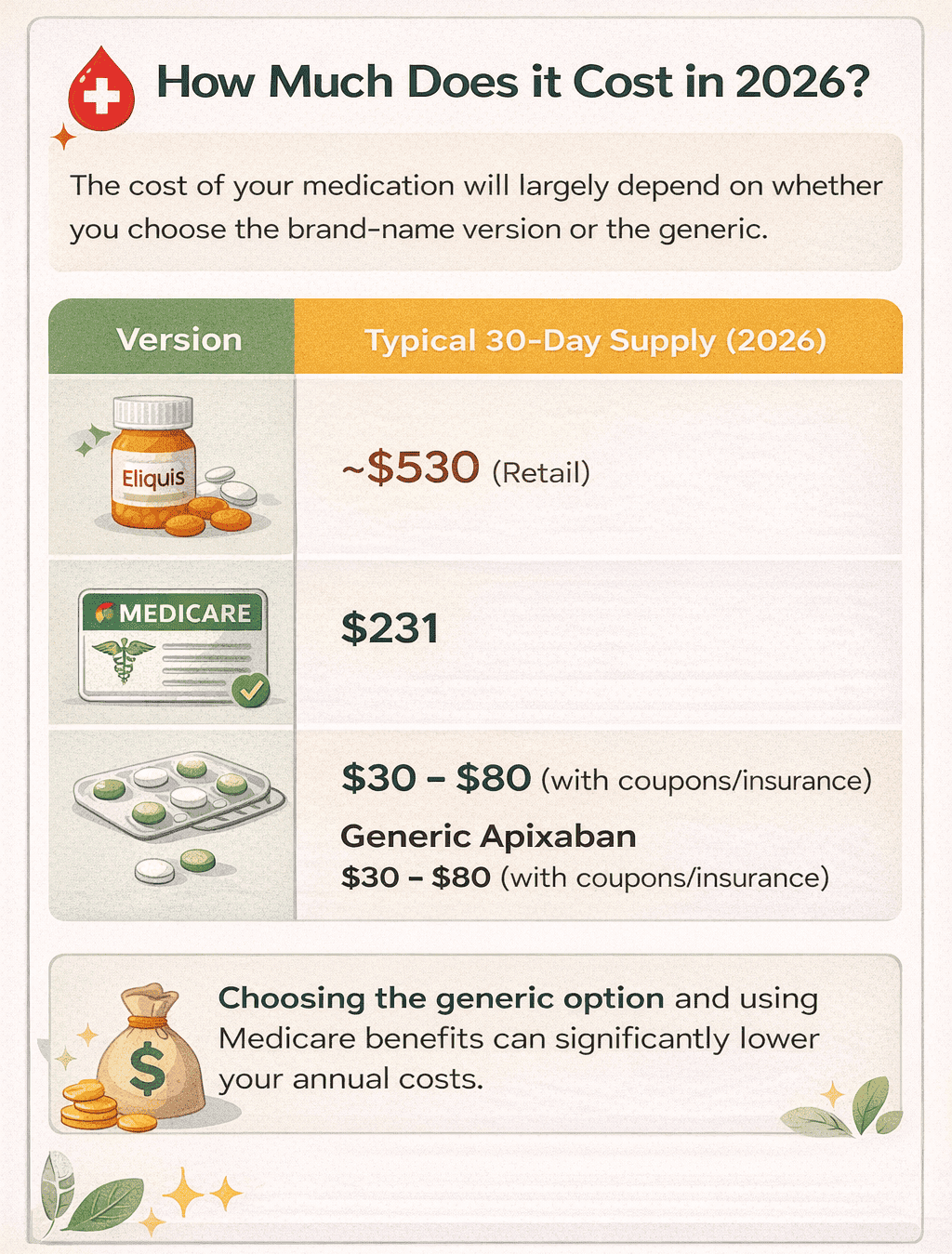
- Medicare Price Cap: As of January 1, 2026, the Inflation Reduction Act has capped the negotiated price of Eliquis at $231 per month for Medicare Part D beneficiaries.
- Annual Out-of-Pocket Cap: Medicare patients also benefit from a new $2,000 annual cap on all prescription drug costs starting this year.
What is Eliquis (Apixaban)?
Eliquis is an anticoagulant (blood thinner) used to prevent serious health events.It works by blocking Factor Xa, a protein necessary for blood to clot.
Common Uses:
- Atrial Fibrillation (AFib): Reducing stroke risk in adults with an irregular heartbeat.
- Deep Vein Thrombosis (DVT): Treating and preventing clots in the legs.
- Pulmonary Embolism (PE): Treating and preventing clots in the lungs.
- Surgery Recovery: Preventing clots after hip or knee replacement.
Is there a Cheaper Alternative to Eliquis?
Eliquis was the third blood thinner to be approved by the FDA. This approval was followed by two other alternative anticoagulants, Pradaxa (dabigatran) and Xarelto (rivaroxaban). However, this is the FDA’s first approval of a generic for Eliquis (apixaban).
Oral anticoagulants such as Coumadin (warfarin) have been commonly replaced by Eliquis and Xarelto. Warfarin requires much more careful screening and monitoring for potential drug interactions which may be serious. Fortunately, people who are prescribed Eliquis do not need this extra monitoring including multiple blood tests which will enable greater access to this drug.
What Type of Blood Clotting Does Eliquis Treat?
Doctors may prescribe Eliquis for the following indications, according to the FDA:
- Reducing the risk of stroke and non-central nervous system (non-CNS) systemic embolism in adult patients with atrial fibrillation (AF)
- Treating and preventing deep vein thrombosis (DVT) and pulmonary embolism (PE) in adults
- To prevent venous thromboembolic events (VTE) in adult patients who have undergone hip or knee replacement surgery
- To reduce the risk of recurrent VTE after an initial VTE event
Blood clots are a serious condition, and possibly life-threatening, that can lead to strokes, heart attacks, and even death. Eliquis is a life-saving medication for people who are at risk for these types of events.
Is there a Generic for Eliquis Available Yet?
There is currently no generic for Eliquis available yet in the United States.
How Much will the Generic Cost?
The cost of your medication now depends largely on whether you use the brand name or the generic.
When Will Generic Eliquis be Available?
The FDA has not announced a specific date when generic Eliquis will be available so there is no Eliquis generic release date at this time. It normally takes several months for a generic to be available for sale following the generic approval, however, the U.S. Patent and Trademark Office had granted Eliquis extended protection on its patent. The Bristol Myers Squibb-Pfizer Alliance recently announced in a press release that the earliest that generic manufacturers are permitted to launch their apixaban products is April 1, 2028, subject to additional appeals and challenges.
How Do You Take Eliquis?
Eliquis is a twice-daily pill that can be taken with or without food. Standard doses are 2.5 mg and 5 mg.
- Standard Dose: Usually 5 mg twice daily.
- Reduced Dose (2.5 mg): Often prescribed for patients who are 80+ years old, weigh less than 60 kg (132 lbs), or have kidney issues.
Important: Never stop taking a blood thinner without talking to your doctor. Stopping early significantly increases your risk of a stroke or heart attack.
What are the Side Effects of Eliquis?
The most common side effect of any blood thinner is bleeding. Because your blood doesn't clot as easily, minor cuts may bleed longer, and you may bruise more easily.
Common Side Effects:
- Easy bruising or nosebleeds.
- Bleeding gums after brushing.
- Nausea or minor indigestion.
When to Seek Immediate Help:
- Heavy menstrual bleeding or "coffee ground" vomit.
- Pink or red urine, or black, tarry stools.
- Severe headache or dizziness (signs of internal bleeding).
“There is an increased risk of thrombotic events, which occur when blood clots form inside a blood vessel, or strokes if a patient stops using apixaban too early. Additionally, epidural or spinal hematomas (bleeding outside of blood vessels) may occur in patients treated with apixaban who are receiving neuraxial anesthesia or undergoing spinal puncture. These hematomas may result in long-term or permanent paralysis. Health care professionals should consider these risks when scheduling patients for spinal procedures.”
These are not all of the possible side effects of Eliquis. You should always seek the medical advice of a licensed healthcare provider for any questions or concerns relating to your medical condition or treatment.
How much does Eliquis cost?
In 2022, the manufacturer’s (Bristol-Myers Squibb) website listed the price of Eliquis as $522 for a 30-day supply without insurance. People who have prescription insurance through Medicare pay $37 on average for Eliquis, according to the manufacturer of Eliquis. The manufacturer also states that some Medicare patients with Part D coverage may pay as little as $10 per month for Eliquis through the use of a Medicare Part D prescription drug plan or a Medicare Advantage plan that includes prescription drug coverage.
Why is Eliquis so expensive?
Eliquis is so expensive because it is a brand-name medication. Brand-name drugs are always more expensive than generic drugs. In contrast, the FDA-approved generic version of Eliquis (apixaban) will be much cheaper. There are several alternatives to Eliquis that you may consider and speak to your doctor to find out if any of these alternatives are medically appropriate for you.
Eliquis is a brand-name medication, which makes it more expensive than generic options. The FDA-approved generic version, apixaban, is typically more affordable. You can also explore alternative treatments—talk to your doctor to find the best and most cost-effective option for your needs. You may also consider trusted providers like Polarbearmeds to access more affordable medication options.
Frequently Asked Questions
Eliquis is approved to reduce the risk of stroke in patients with atrial fibrillation. It also treats and prevents deep vein thrombosis (DVT) and pulmonary embolism (PE).
The earliest generic apixaban could hit the U.S. market is 2026. This is due to patent protections still held by the manufacturers of brand-name Eliquis.
Americans can order generic apixaban from licensed international online pharmacies before the U.S. generic is available.
Yes, generic apixaban contains the same active ingredient as brand name Eliquis. The FDA requires generics to be just as safe and effective.
Generic drugs are usually 80-85% cheaper than brand name. Eliquis costs about $500/month without insurance. The generic will likely be under $100/month.