BCBS Cutting GLP-1 coverage 2026: State-by-State Reality for US Patients
Key Takeaways
Key Takeaways:
1. BCBS GLP-1 coverage changes in 2026 vary by state, plan, and employer group.
2. BCBS MA, BCBS Michigan, and Horizon BCBS show different 2026 policy changes.
3. Weight-loss GLP-1 coverage may differ from type 2 diabetes coverage.
4. Patients should check formularies, renewal dates, denial letters, and appeal options.
5. Canadian pharmacy pricing can be reviewed as one cash-pay comparison route.
BCBS cutting GLP-1 coverage 2026 affects many US patients differently by state, plan, and employer. BCBS Massachusetts says obesity GLP-1 coverage ends at plan renewal, starting January 1, 2026. Diabetes-approved GLP-1 drugs remain covered under separate rules. Patients should check state policies, employer benefits, appeals, and cash-pay options before coverage changes apply.
Why Is BCBS Cutting GLP-1 Coverage in 2026?
BCBS dropping GLP-1 coverage in 2026 reflects rising obesity-drug costs across some plans. BCBS Massachusetts says it must balance drug access with premium stability for all members. The change mainly affects GLP-1 drugs used for weight management.
For patients, this means coverage depends on the diagnosis and plan type. Employer benefits, prior authorization rules, and renewal dates also matter. Patients should check their formulary and denial letter before assuming coverage is fully lost.
Which BCBS Plans Are Cutting GLP-1 Coverage in 2026?
Several BCBS plans are changing GLP-1 coverage in 2026, but not equally. BCBS Massachusetts is ending GLP-1 coverage except for type 2 diabetes. The change starts when a member’s plan renews from January 1, 2026. Its provider update names Saxenda, Wegovy, and Zepbound as affected obesity drugs.
BCBS Michigan’s 2026 commercial formulary excludes GLP-1 drugs used for weight loss. It names Saxenda, Wegovy, and Zepbound for fully insured commercial members. Horizon BCBS is taking a different approach. Starting January 1, 2026, prior authorization will be required for GLP-1 medications used for weight loss.
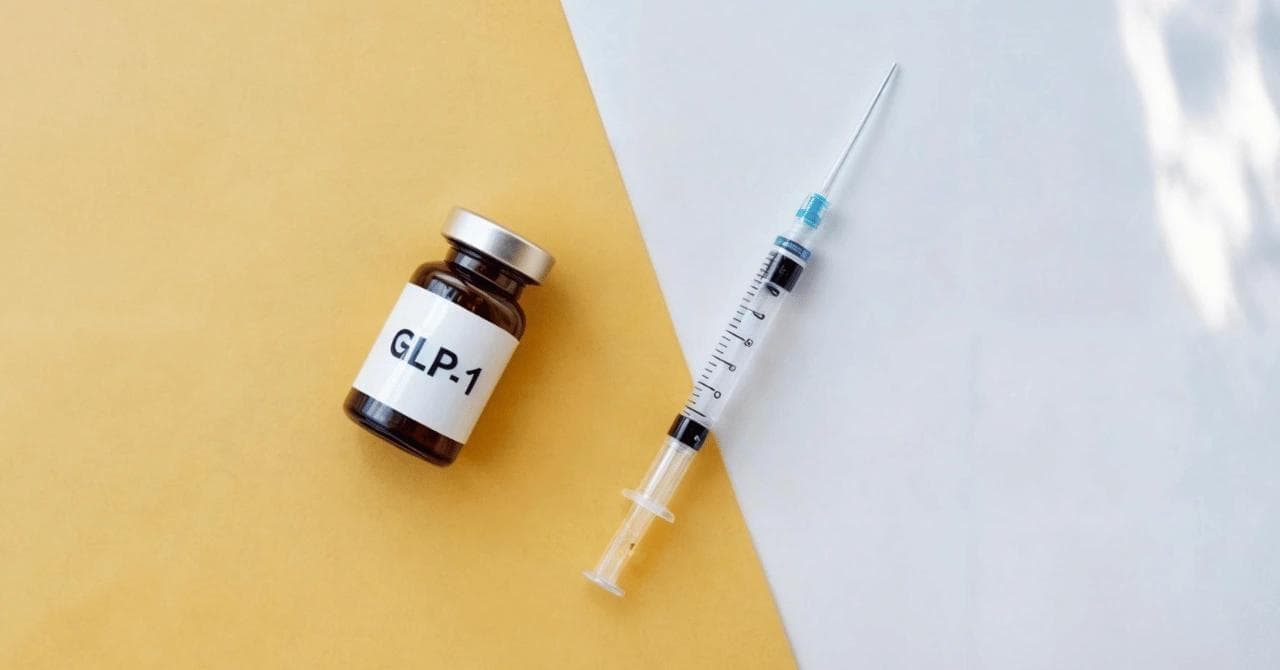
BCBS MA GLP-1 Coverage Cuts 2026: What Small Employers Should Know
BCBS MA’s 2026 GLP-1 coverage cuts matter most for smaller employer groups. The plan update says GLP-1 coverage ends at renewal, except for type 2 diabetes. This change applies to renewals starting January 1, 2026. This gives employers a clear plan renewal timeline for benefit review.
BCBS MA’s medication tool shows a benefit exclusion for weight-loss GLP-1 drugs. Examples include Saxenda, generic liraglutide, Wegovy, and Zepbound. Diabetes-approved GLP-1 drugs remain covered under separate rules.
Small employers should review their group size, formulary, and SBC documents. Larger groups should ask whether an employer-purchased optional rider is available. BCBS MA says coverage policy documents are organized by employer group size. It lists separate options for 50 or fewer employees and 51 or more employees.
State-by-State BCBS GLP-1 Coverage Changes in 2026
BCBS GLP-1 coverage changes vary by state, plan type, and employer group. The table below summarizes public 2026 updates from selected BCBS plans. It also highlights each BCBS GLP-1 weight loss exclusion state update.
| State / BCBS Plan | 2026 GLP-1 Coverage Change | Who Is Most Affected | What Patients Should Check |
|---|---|---|---|
| Massachusetts / BCBS MA | GLP-1 obesity coverage ends at plan renewal, starting January 1, 2026. | Members using Saxenda, Wegovy, or Zepbound for obesity. | Renewal date, employer group size, formulary, and appeal rights. |
| Michigan / BCBS Michigan | GLP-1 weight-loss drugs are excluded for fully insured commercial members. | Fully insured commercial members using weight-loss GLP-1 drugs. | 2026 drug list, plan type, and employer benefit design. |
| New Jersey / Horizon BCBS | Prior authorization applies to GLP-1 drugs used for weight loss. | Members seeking GLP-1 coverage for non-diabetic use. | Prior authorization rules, diagnosis requirements, and plan documents. |
| Other BCBS States | No single national BCBS rule applies across all states. | Members in state-specific or employer-sponsored plans. | State BCBS formulary, SBC, denial letter, and HR benefit notice. |
← Swipe to see more →
Does BCBS Still Cover Wegovy, Ozempic, Zepbound, or Mounjaro in 2026?
BCBS coverage depends on the drug, diagnosis, and plan document. For obesity coverage, Wegovy and Zepbound face more plan restrictions. This explains why many patients search for Blue Cross cutting Wegovy 2026. For diabetes coverage, Ozempic and Mounjaro are reviewed under separate rules. Some formularies exclude weight-loss GLP-1 drugs while keeping separate diabetes coverage rules.
Ozempic and Mounjaro are FDA-approved for type 2 diabetes. Wegovy and Zepbound have FDA-approved uses for weight management. Patients should check their formulary before assuming any GLP-1 is covered.
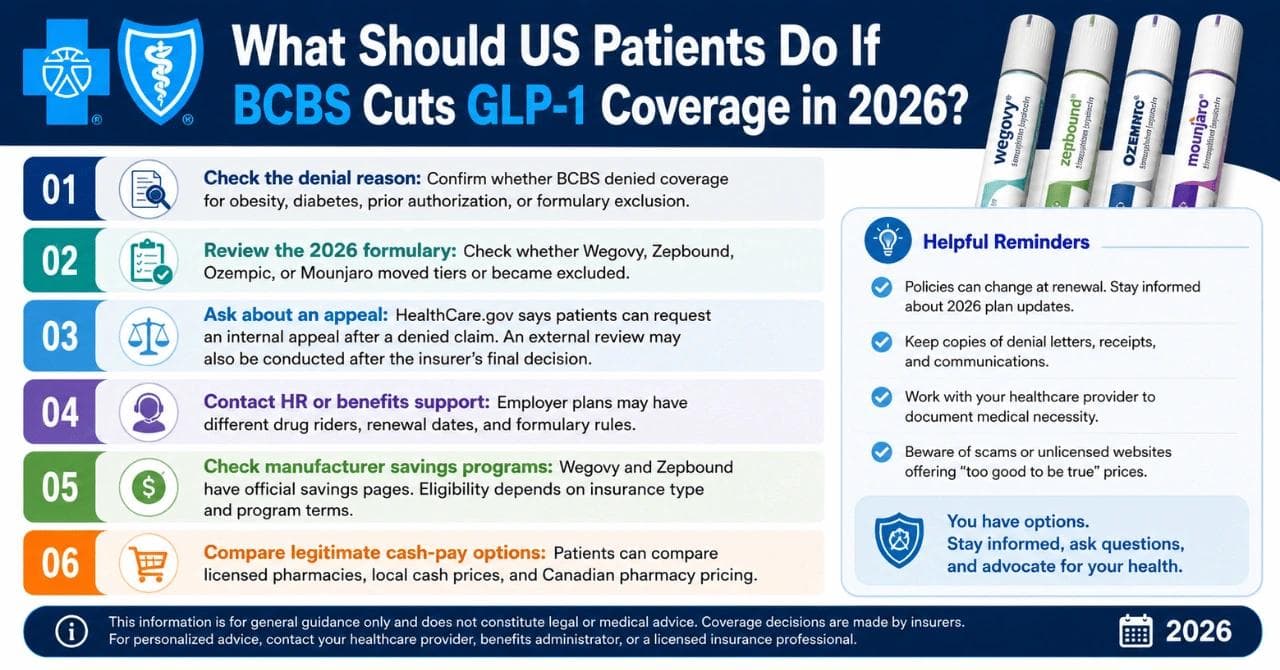
What Should US Patients Do If BCBS Cuts GLP-1 Coverage in 2026?
If BCBS cuts GLP-1 coverage, patients should act before paying full cash prices. Start with the plan documents, then review appeal and discount options.
- Check the denial reason: Confirm whether BCBS denied coverage for obesity, diabetes, prior authorization, or formulary exclusion.
- Review the 2026 formulary: Check whether Wegovy, Zepbound, Ozempic, or Mounjaro moved tiers or became excluded.
- Ask about an appeal: HealthCare.gov says patients can request an internal appeal after a denied claim. An external review may also be conducted after the insurer’s final decision.
- Contact HR or benefits support: Employer plans may have different drug riders, renewal dates, and formulary rules.
- Check manufacturer savings programs: Wegovy and Zepbound have official savings pages. Eligibility depends on insurance type and program terms.
- Compare legitimate cash-pay options: Patients can compare licensed pharmacies, local cash prices, and Canadian pharmacy pricing.
Can US Patients Compare Canadian Pharmacy Prices After BCBS GLP-1 Coverage Cuts?
US patients can compare Canadian pharmacy prices after BCBS GLP-1 coverage cuts. However, they should treat this as cost research rather than automatic access. The FDA says most personal drug importation is illegal, except under narrow enforcement-discretion situations. Patients should also verify that the drug is approved in Canada. Health Canada lists Wegovy as an approved prescription product in its Drug Product Database.
Final Thoughts on BCBS Cutting GLP-1 Coverage in 2026
BCBS cutting GLP-1 coverage in 2026 may increase out-of-pocket costs for US patients. Before paying out of pocket, patients should confirm renewal dates, formularies, appeals, and employer benefits.
For patients comparing non-insurance pricing, Canadian pharmacy prices are worth reviewing. Polar Bear Meds helps US patients compare current Wegovy pricing in USD. It also explains prescription-based ordering from Canada.
Frequently Asked Questions
No. BCBS coverage rules are not national or identical. Each state plan, employer group, and formulary can work differently.
Check your benefits booklet, SBC, or employer benefits portal. You can also ask HR or call BCBS member services.
Some changes apply at renewal, while others depend on plan terms. Check your notice, formulary update, and denial letter.
Yes. BCBS MA says its GLP-1 change does not apply to type 2 diabetes coverage. Diagnosis and FDA-approved use can affect coverage.
Some manufacturers offer savings or assistance programs. Eligibility depends on insurance type, income rules, and program terms.
Disclaimer
This blog is for general information and cost-comparison purposes only. It is not medical, legal, insurance, pharmacy, or treatment advice. BCBS rules, formularies, renewal dates, appeals, pricing, and pharmacy policies can change. They may vary by state, employer plan, diagnosis, insurer, pharmacy, and route of access. Confirm details with your insurer, HR team, prescriber, pharmacist, or official documents.