


Prices from $28.95
Questions about your order?Call 1-(888)-478-2193
 Ships from Canada


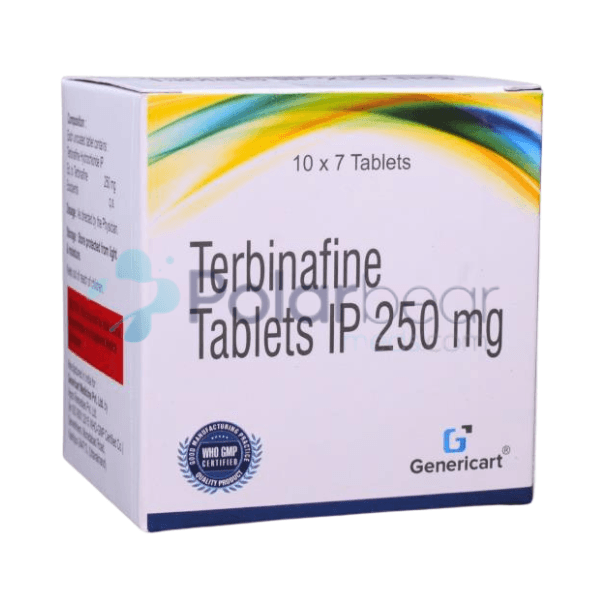
Terbinafine 250 mg tablets are a prescription oral antifungal used to treat fungal nail infections (onychomycosis) of the toenails and fingernails caused by dermatophytes. It belongs to a class of medications called allylamine antifungals. Visible improvement may take several months after treatment, as healthy nail growth gradually replaces the infected nail. Laboratory confirmation of fungal infection is recommended before starting therapy.
Below is a quick overview of important facts for patients and caregivers:
| Product Name (Generic) | Terbinafine |
|---|---|
| Strengths | 250 mg tablet |
| Drug Class | Allylamine antifungal |
| Primary Use | To treat onychomycosis (fungal infection of fingernails or toenails) |
| Dosage Form | Oral tablet |
| Prescription Required | Yes |
| Storage | Store at 68°F-77°F (20°C-25°C); protect from moisture. |
← Swipe to see more →

Terbinafine tablets are indicated for the treatment of fungal nail infections caused by dermatophytes. Its approved uses are as follows:
Important Information:
Terbinafine is intended for dermatophyte nail infections and should be used only after proper diagnosis.

Terbinafine is an allylamine antifungal that works by disrupting the fungal cell membrane. It acts by:
This medication has demonstrated activity against dermatophytes such as:
Its effectiveness depends on the fungal species involved and drug concentration

Always follow your healthcare provider’s instructions. General guidelines include:
Treatment duration depends on the type of infection:
Do not stop treatment early unless directed by your provider.
If you miss a dose:
The recommended dosage of terbinafine tablets depends on the affected nail.
| Condition | Recommended Dose | Duration |
|---|---|---|
| Fingernail onychomycosis | 250 mg once daily | 6 weeks |
| Toenail onychomycosis | 250 mg once daily | 12 weeks |
← Swipe to see more →
Before starting treatment, patients should be evaluated for evidence of chronic or active liver disease. Clinical improvement may not be visible until several months after completing therapy, as healthy nail growth gradually replaces the infected nail.
Clinical experience with terbinafine overdose is limited.
Symptoms of overdose may include:
If an overdose is suspected, seek immediate emergency medical help or contact a poison control center.

Terbinafine tablets may cause side effects, some of which can be serious.
Commonly reported Terbinafine side effects are listed below:
These effects are generally mild and may resolve during treatment.
Terbinafine tablets may cause serious adverse reactions. Seek medical attention if you experience any of the following:
Liver problems:
Liver injury, including liver failure requiring transplant or resulting in death, has been reported. Symptoms may include:
Liver function testing should be performed before starting treatment and may be monitored during therapy.
Changes in taste or smell:
Depressive symptoms:
Low white blood cell count (neutropenia):
Serious skin or allergic reactions:
Lupus flare:
Blood clotting problems:
This is not a complete list of side effects. Contact your healthcare provider for medical advice about adverse reactions. You may report side effects to the FDA at 1-800-FDA-1088 or visit MedWatch.

Terbinafine tablets are associated with serious adverse reactions and should be used under appropriate medical supervision.
While using this medication, the following warnings should be considered:
Before and during treatment, consider the following:
Pregnancy:
Available data from postmarketing cases in pregnant women are insufficient to evaluate a drug-associated risk. Use during pregnancy only if the potential benefit justifies the potential risk to the fetus.
Breastfeeding:
Terbinafine is present in human breast milk following oral administration. There are no adequate data on the effects on milk production or on breastfed infants. The developmental and health advantages of breastfeeding should be considered along with the mother’s clinical need for terbinafine and any potential adverse effects on the infant.

Terbinafine is a CYP450 2D6 inhibitor and may alter the levels of medications metabolized by this pathway. Monitoring or dose adjustments may be required. Drugs that may require caution or monitoring are as follows:
Additional important drug interactions are listed in the table below:
| Concomitant Drug | May increase caffeine effects | Clinical Consideration |
|---|---|---|
| Rifampin | Increases terbinafine clearance (~100%) | May reduce terbinafine effectiveness |
| Cimetidine | Decreases terbinafine clearance (~33%) | May increase terbinafine levels |
| Fluconazole | Increases terbinafine exposure (increases Cmax and AUC) | Use caution; monitor for adverse effects |
| Warfarin | Reports of altered prothrombin time | Monitor INR closely |
| Caffeine | Clearance reduced (~19%) | May increase caffeine effects |
| Cyclosporine | Clearance increased (~15%) | Monitor cyclosporine levels |
← Swipe to see more →

Other antifungal medications may be used depending on the type and severity of fungal infection, patient comorbidities, and drug interaction profile.
| Brand Name | Triazole Antifungal | Drug Class |
|---|---|---|
| Lamisil | Terbinafine | Allylamine Antifungal |
| Sporanox | Itraconazole | Azole Antifungal |
| Diflucan | Fluconazole | Azole Antifungal |
| Gris-PEG | Griseofulvin | Antifungal |
| Jublia | Efinaconazole (topical) | Triazole Antifungal |
| Penlac | Ciclopirox (topical) | Hydroxypyridone Antifungal |
← Swipe to see more →
Brand availability may vary by location and supply. Treatment selection should be determined by a healthcare provider based on infection type, liver function, drug interactions, and patient-specific factors.

Prescription antifungal medications may be costly at many U.S. retail pharmacies. Ordering Terbinafine tablets online from Polar Bear Meds helps reduce overall costs while maintaining safety, quality, and reliability.
All Terbinafine orders require a valid prescription. Medications are dispensed by licensed pharmacies that comply with applicable pharmacy regulations and safety standards.

This content is for informational purposes only and does not replace expert medical guidance, diagnosis, or treatment. Terbinafine is a prescription antifungal medication used to treat certain fungal infections, including onychomycosis (fungal nail infections). Always consult an authorized healthcare professional before starting, stopping, or changing the dosage. Individual results, side effects, and dosing needs may vary.

Dr. Jackson Miller is a board-certified medicine physician & hospitalist. He is a healthcare professional with a strong background in patient care. With years of experience and a patient-first approach, he believes the foundation of good health is a patient who feels informed and empowered. He contributes to medical content review, drawing on his background in clinical practice and patient education. He focuses on presenting health information in a clear, accurate, and accessible way to help readers make informed decisions. His work emphasizes clarity, evidence-based guidance, and understandable explanations of medical topics.
Learn more about Terbinafine and related topics



We offer competitive pricing on all our medications. We'll match if you find a lower price on an identical product at a verified Canadian online pharmacy!
Need help? Call our sales team at 1-(888) 478-2193 or fill out the Contact Form