Can You Take Metformin with Ozempic for Weight Loss? Safety, Benefits, and What Experts Say
If you are exploring medications for weight loss while managing type 2 diabetes or insulin resistance, you may be wondering whether Ozempic (semaglutide) and metformin can be used together. The short answer: yes. These medications are often prescribed either on their own or in combination, depending on your health goals and medical history.
Both drugs work in different ways to help regulate blood sugar, and together they may offer added benefits for weight management. In this guide, we’ll break down how this combination works, its potential benefits and risks, and what healthcare professionals typically recommend before starting treatment.
Can You Take Metformin and Ozempic Together for Weight Loss?
Yes, Metformin and Ozempic (semaglutide) can be taken together for weight loss as healthcare providers prescribe it off-label for that purpose. This combination is commonly prescribed by healthcare providers for people with type 2 diabetes or insulin resistance. In many cases, using both medicines together is not only safe but also more effective than using either one alone, when guided by a licensed medical professional.
Is It Safe to Take Metformin and Ozempic Together for Weight Loss?
For individuals using Metformin and Ozempic off-label for weight management, the combination may enhance results, but safety depends on your personal health profile.
The clinical studies from PubMed Central for the safety and efficacy of Ozempic combined with metformin state that:
- There are no major direct drug interactions between Metformin and Ozempic.
- The combination is generally well tolerated, especially when monitored and started gradually.
- The risk of low blood sugar (hypoglycemia) remains low unless combined with other diabetes medications like insulin.
Benefits of Combining Metformin and Ozempic for Weight Loss
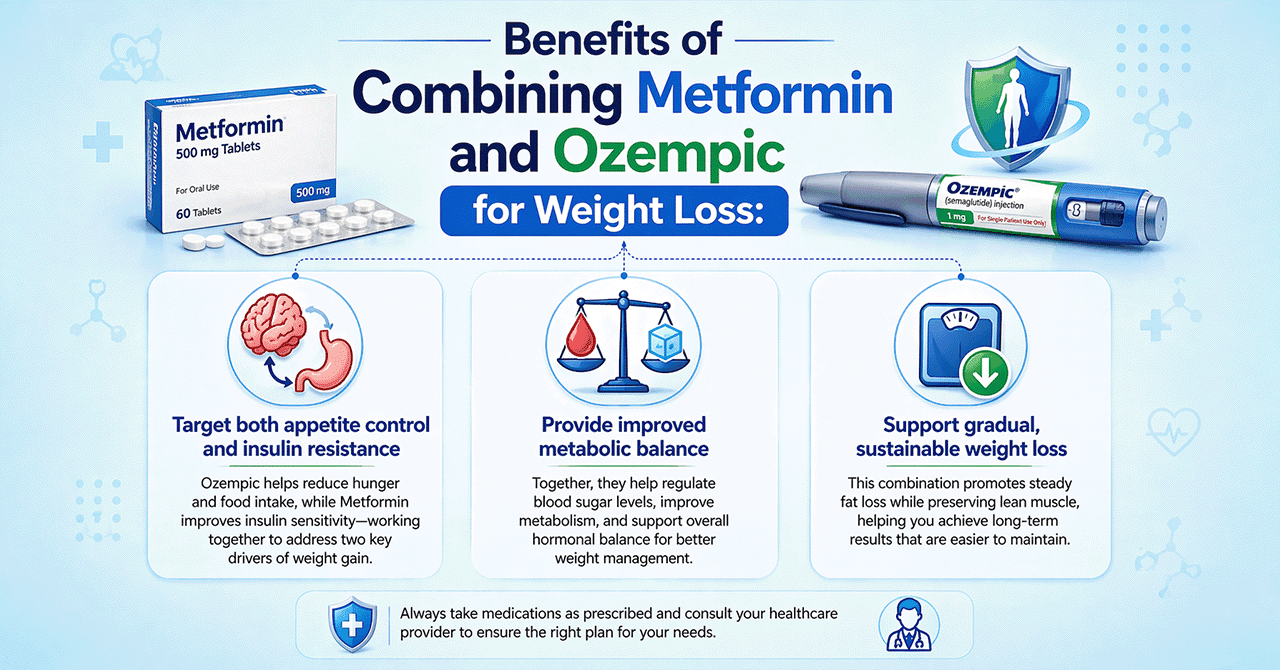
When used together for weight loss, Ozempic and Metformin can:
- Target both appetite control and insulin resistance
- Provide improved metabolic balance
- Support gradual, sustainable weight loss
However, the combination is not officially FDA-approved specifically for weight loss, and results vary from person to person.
Ozempic vs Metformin for Weight Loss: Key Differences
Ozempic and Metformin differ in how they work, how much weight loss they support, and how they are taken. The table below highlights their key differences for easier comparison.
| Feature | Ozempic (Semaglutide) | Metformin |
|---|---|---|
| Primary use | Type 2 diabetes, weight management | Type 2 diabetes |
| Weight loss effect | High | Modest |
| Mechanism | Appetite control (GLP-1) | Insulin sensitivity |
| Dosing | Weekly injection | Daily oral tablet |
← Swipe to see more →
How Much Weight Can You Lose on Ozempic and Metformin Together?
Using Ozempic and Metformin together may support meaningful weight loss, though results vary by individual. Noticeable changes are often seen within 3 to 12 months with consistent treatment and lifestyle habits. The clinical studies on weight loss outcomes with Ozempic and Metformin show:
- Ozempic: 10-15% body weight (clinical trial range)
- Metformin: 2-5% body weight
- Combined: No fixed number, but may improve consistency of results
Keep in mind that diet, physical activity, and treatment adherence are pivotal for outcomes.

What Are the Side Effects of Taking Metformin and Ozempic Together?
Taking Metformin and Ozempic together may increase gastrointestinal side effects, especially during the first few weeks or after dose adjustments. Let us explore common, overlapping, and serious side effects of taking Metformin and Ozempic together for weight loss.
Common Side Effects
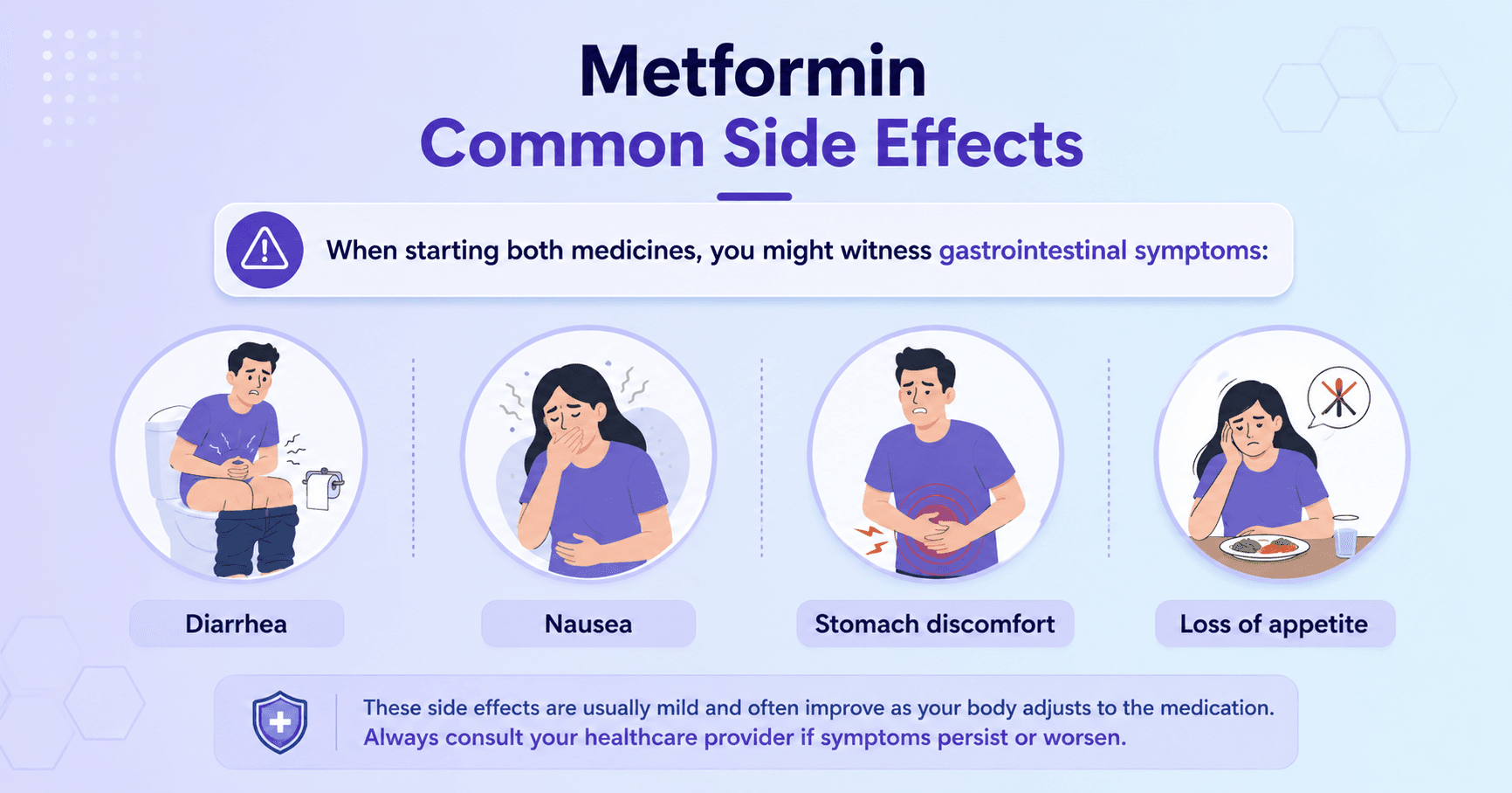
When starting both medicines, you might witness gastrointestinal symptoms:
- Diarrhea
- Nausea
- Stomach discomfort
- Loss of appetite
Overlapping Effects
When combined, these side effects may feel more noticeable, particularly in the early weeks.
Serious Side Effects (Rare But Concerning)
- Metformin: Risk of lactic acidosis (rare but serious, especially in kidney disease)
- Ozempic: Possible risk of pancreatitis or gallbladder issues
According to the FDA, patients should seek immediate medical help if they experience:
- Persistent vomiting
- Severe abdominal pain
- Unusual fatigue or weakness
Who Should Avoid Taking Metformin and Ozempic Together for Weight Loss?
The combination of Metformin and Ozempic may not be suitable for everyone. Be cautious if you have:
- Kidney disease
- History of pancreatitis
- Severe gastrointestinal issues
- Pregnancy or breastfeeding
Before prescribing these medications, your healthcare provider will evaluate you.
What Experts Say About Using Metformin with Ozempic for Weight Loss?
For many patients, metformin remains the first-line therapy, with Ozempic added when additional blood sugar control or weight loss support is needed. Findings from the National Institutes of Health support the combination of Metformin and Ozempic when treatment is tailored to individual health needs.
This approach is commonly used in medical practice, particularly for patients who require stronger metabolic support beyond a single medication. Always consult your doctor if you are considering taking Ozempic and Metformin together for weight loss, especially if:
- Side effects become severe or persistent
- Weight loss is too minimal or rapid
Can Metformin Be Reduced or Stopped When Taking Ozempic for Weight Loss?
Some patients may reduce or stop metformin after starting Ozempic, but this decision depends on individual response and treatment goals.
Your healthcare provider may recommend changes if:
- Blood sugar remains uncontrolled
- Weight loss goals require adjustment
- Side effects become difficult to tolerate
Some patients continue both medications, while others reduce the metformin dose or switch therapies based on clinical response.
Final Thoughts: Is Combining Metformin and Ozempic for Weight Loss Worth It?
For people with type 2 diabetes or PCOS, the combination of metformin and Ozempic (semaglutide) can be a medical option to improve blood sugar control and support meaningful weight loss. These medications work through different, complementary pathways, which is why healthcare providers may prescribe them together in specific cases.
However, this is not a universal or first-line weight loss solution, and it should never be used without proper medical guidance. Factors like kidney function, tolerance, and treatment goals matter when determining whether this combination is appropriate.
Frequently Asked Questions
Yes, you may take Ozempic and Metformin together, but only under a doctor’s supervision to ensure safety and with a proper dosage schedule.
Weight loss varies, but Ozempic typically leads to more significant results, while metformin offers modest support.
Yes, Ozempic is generally more effective for weight loss, based on clinical evidence.
Medical Disclaimer
The above content is for informational purposes only and does not replace professional medical advice. Always consult a licensed healthcare provider before starting or combining medications.